

Article contents
Ground tank walls and footings cast against steel or plywood formwork come out very smooth, and ordinary plaster does not bond well to them. On our projects we use the bonding agent Vetonit Bond Pure as a bond coat before plastering — instead of, or together with, the traditional spatterdash — and as an admixture in the plaster mix itself. This article explains what the product is and how we apply it step by step, with real photos from ground water tanks we are building in Madinah and the Eastern Province.
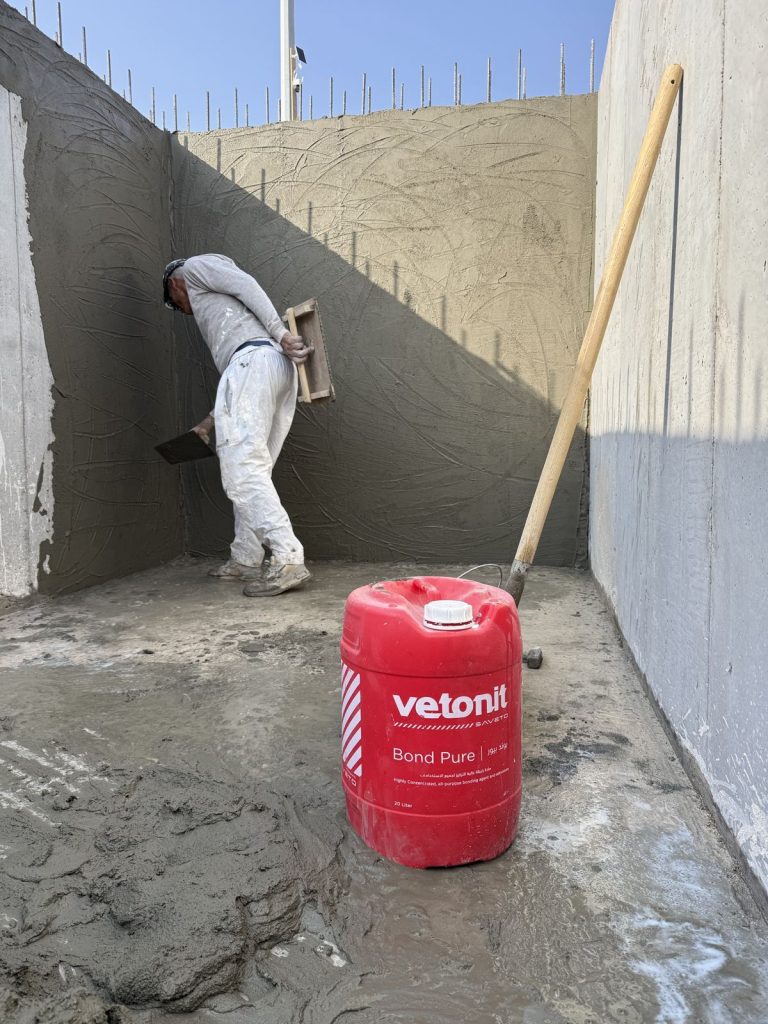
What is Vetonit Bond Pure?
Vetonit Bond Pure is a bonding agent and admixture for cementitious materials made by Saudi Vetonit Co. Ltd. (SAVETO), founded in 1981. It is a single-component, water-based polyvinyl acetate (PVA) product, described on the pack as a “highly concentrated, all-purpose bonding agent and admixture”. It improves adhesion between new and existing layers, increases the strength of cement mixes and reduces early shrinkage cracks by slowing water loss from the surface.
- As a bond coat: sprayed or brushed onto the substrate before plaster or repair mortars.
- As an admixture: added to the mixing water of plasters, screeds, mortars and cement grouts.
- Suitable for internal and external work.
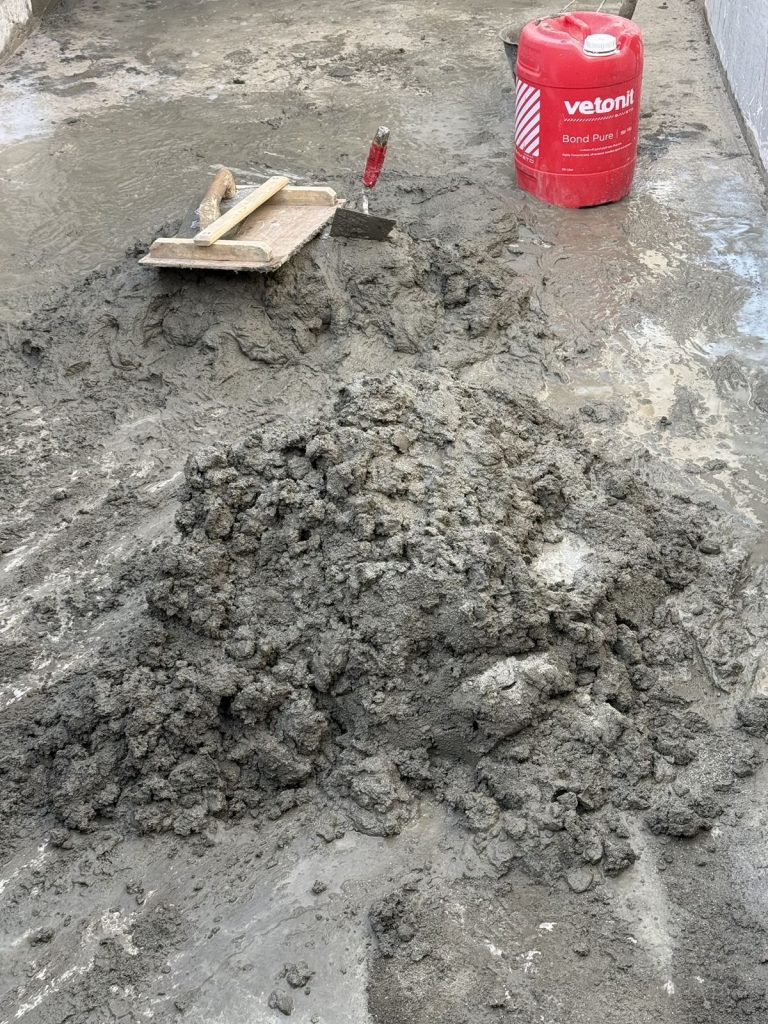
Why does smooth concrete need a bonding agent before plastering?
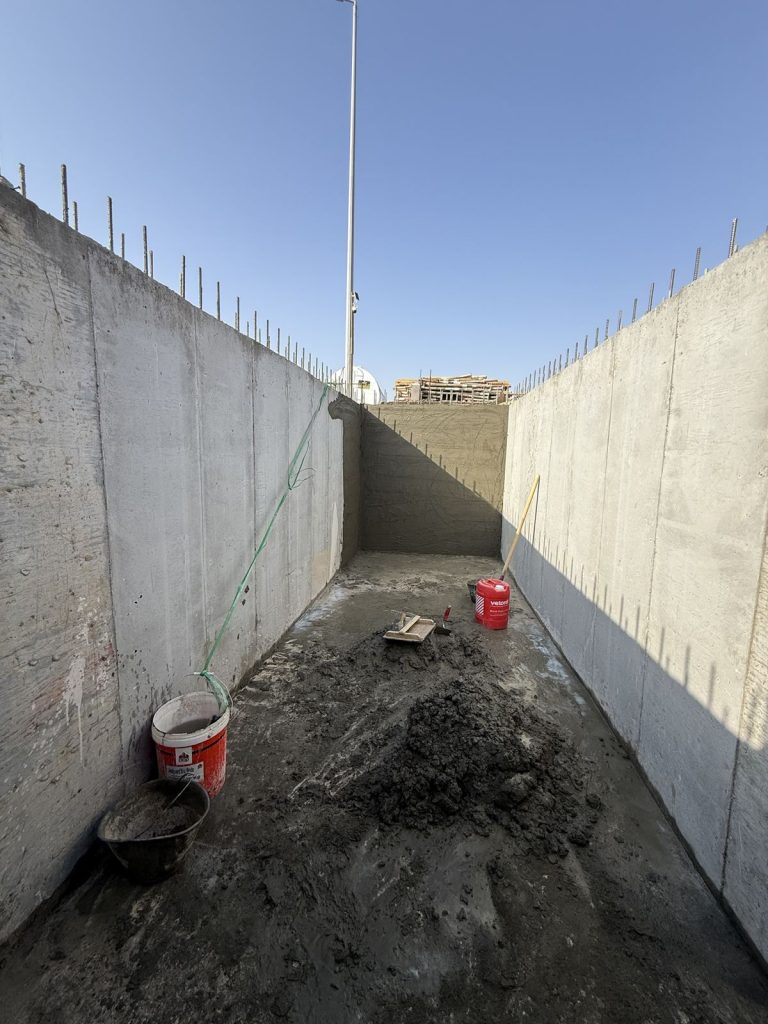
Below is a ground tank wall right after striking the formwork: a smooth surface with traces of release oil and far lower suction than blockwork. Plaster applied without preparation typically shows:
- Hollow (drummy) plaster that sounds empty when tapped because it has not bonded.
- Debonding and spalling over time, especially with heat and humidity changes underground.
- Hairline cracks as the new layer dries too fast.
- Weak spots under the waterproofing that can become leak points in a tank.
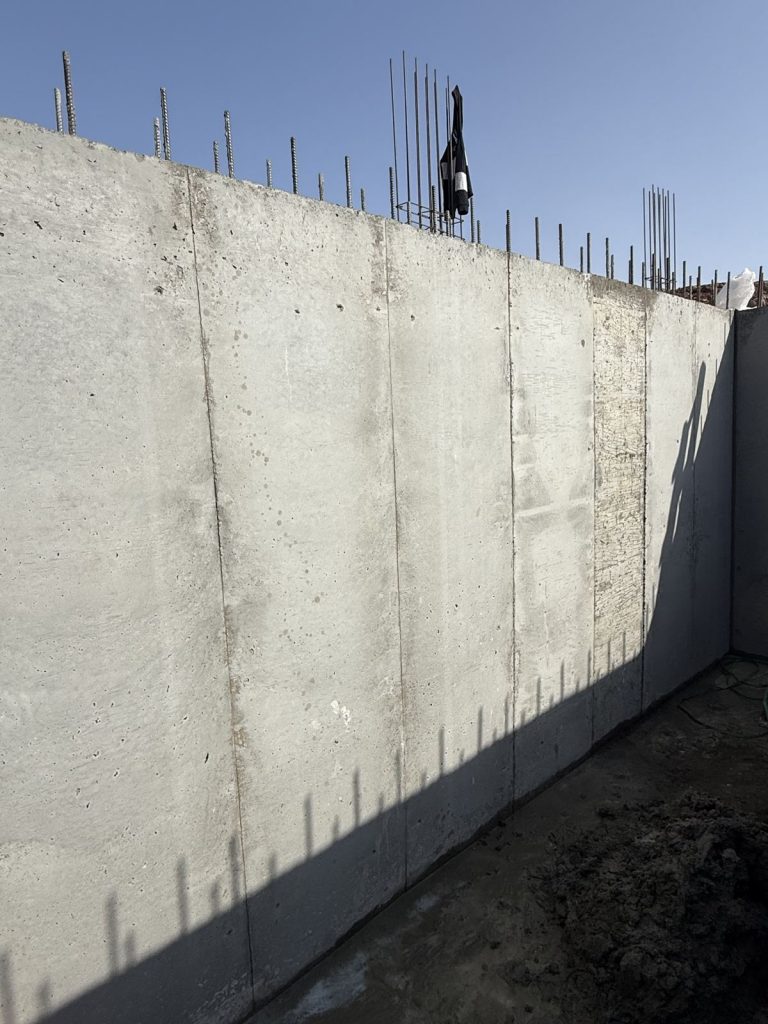
Bonding agent instead of spatterdash, or with it?
| Method | When we use it | Notes |
|---|---|---|
| Traditional spatterdash only | Blockwork or rough, absorbent concrete | Not enough on smooth or oily formed concrete |
| Bond Pure slurry coat (instead of spatterdash) | Smooth concrete walls and floors such as tanks and footings | Plaster is applied while the slurry is still tacky |
| Spatterdash with Bond Pure in the mix | When a rough key and stronger grip are needed | Same idea as spatterdash, with the bonding agent added |
| Bond Pure in the plaster mixing water | With any of the above | Better cohesion and fewer early cracks |
Step-by-step application as we do it on site
1. Surface preparation
We clean off dust, loose concrete and release-oil residue, fill tie holes and honeycombing, then dampen the surface without leaving standing water. Very dry concrete sucks water out of the bond coat, while standing water dilutes it.
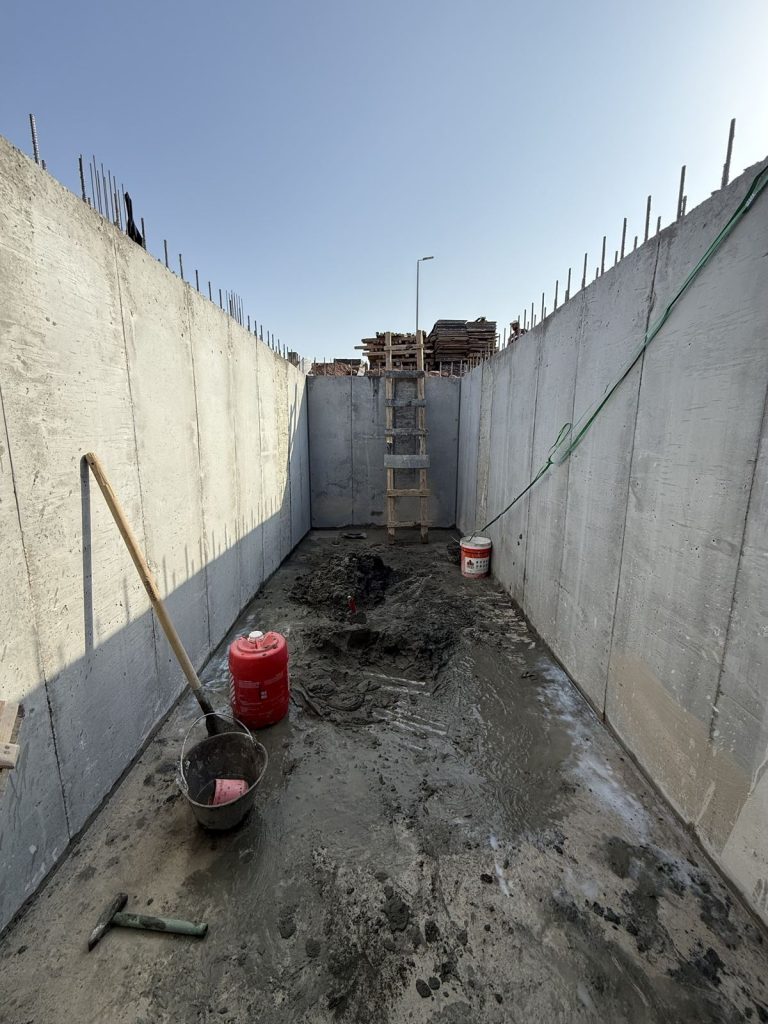
2. Mixing ratios
- Bond coat: 2 parts Bond Pure to 1 part potable water, mixed with cement into a uniform slurry applied by brush or spray.
- Plaster admixture: 1 part Bond Pure to 2 parts water, used as the gauging water.
Always follow the technical data sheet on the pack, and mix only what can be used before it starts to set.
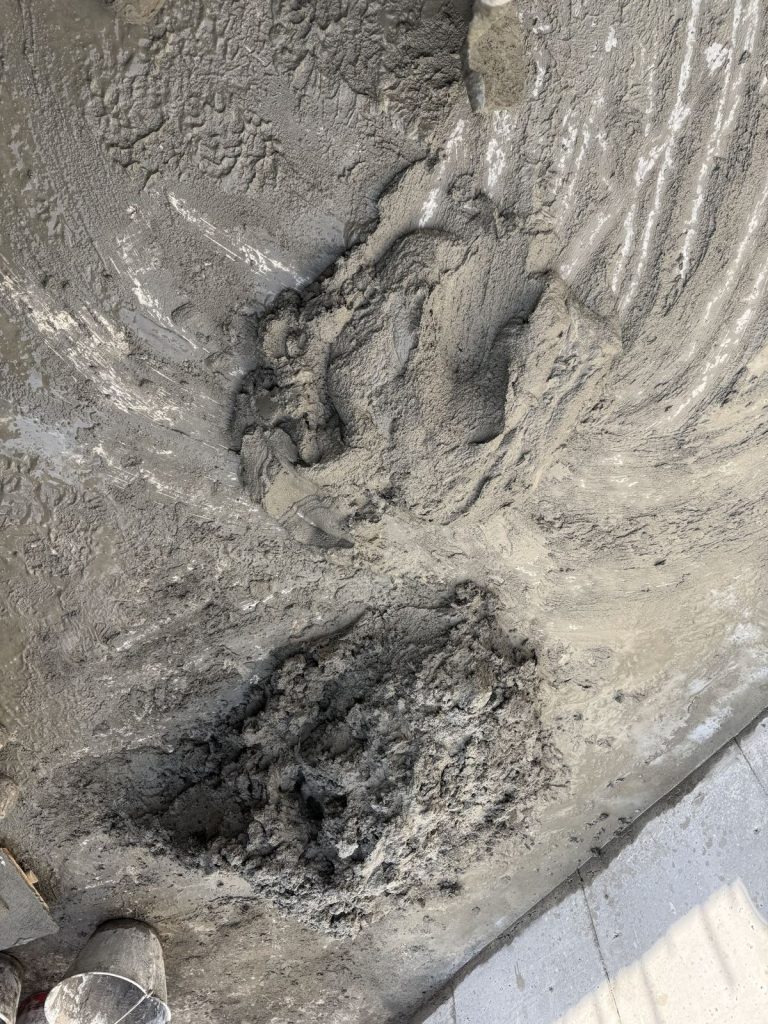
3. Bond coat, then plaster while it is still tacky
The key step: plaster goes on wet-on-wet while the bond coat is still tacky. A fully dried bond coat becomes a smooth film and no longer bonds properly.
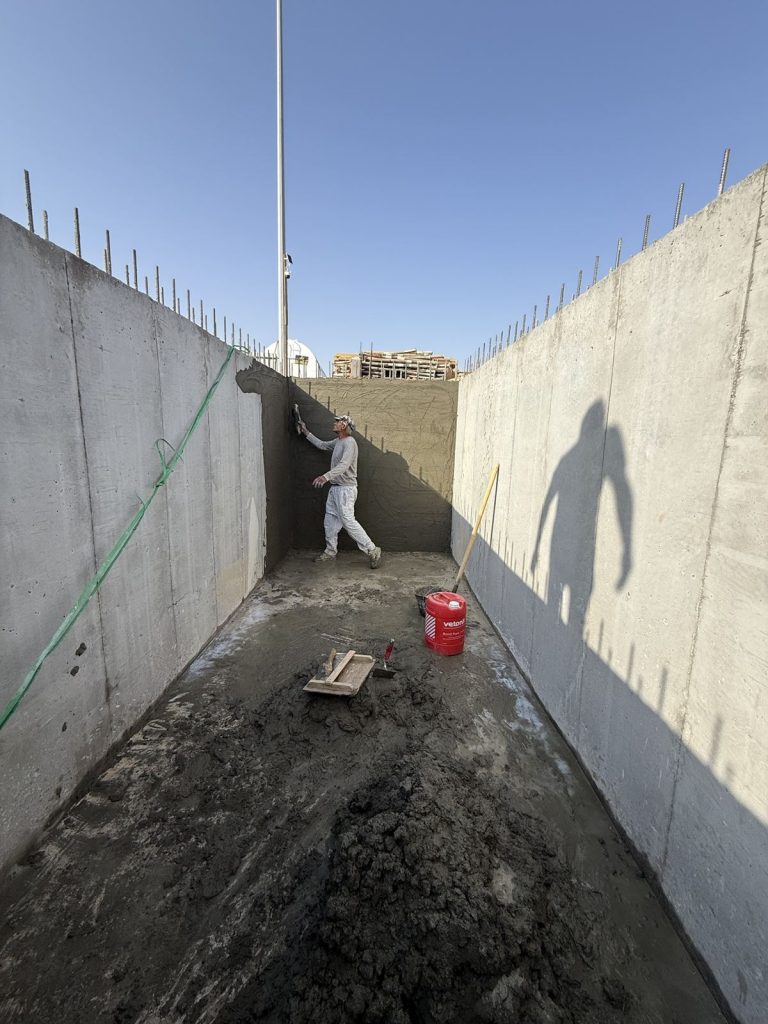
4. Curing
We mist the plaster several times a day for several days and shield it from direct sun and dry wind where possible — Madinah and Eastern Province heat dries plaster very quickly.
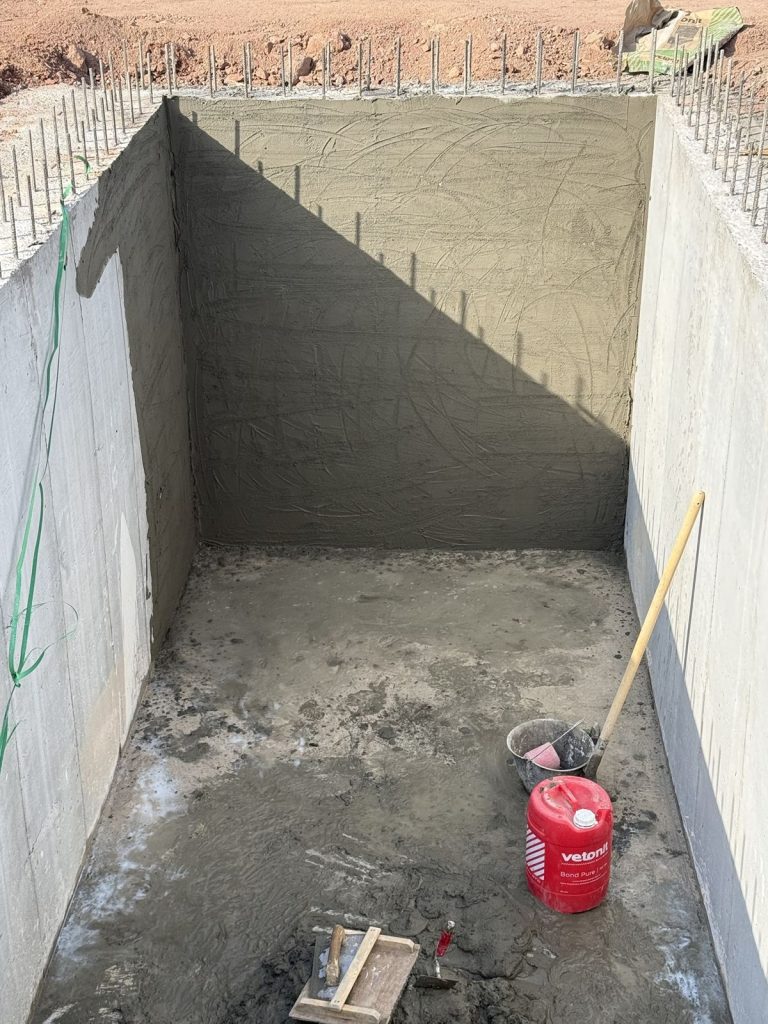
Its role in ground water tanks
- Properly cast tank concrete with treated joints and pipe penetrations.
- Cleaning, dampening and the Bond Pure bond coat.
- Smooth cement plaster with the bonding agent, with rounded wall-floor corners.
- Water curing.
- A tank waterproofing system approved for potable water on all walls, floor and roof.
- Flood test before commissioning.
Important: PVA bonding agents are excellent for plastering and preparation, but the layer in permanent contact with water must be a tank waterproofing system approved for drinking water — never the bonding agent itself.
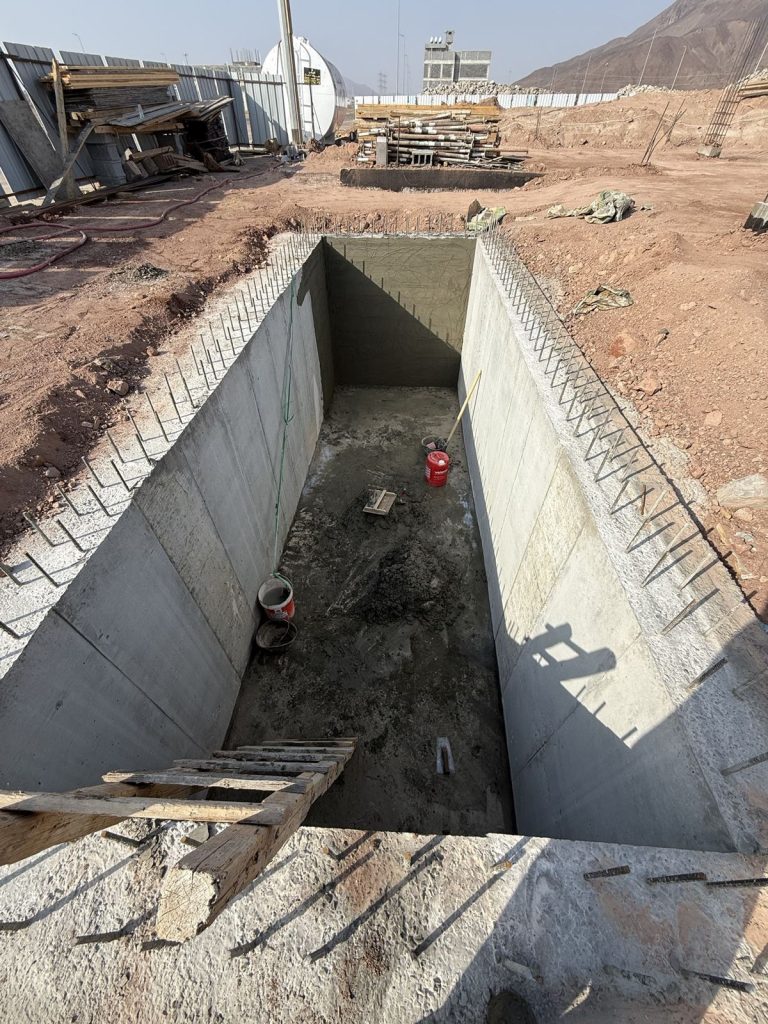
See the full project: Ground Tank Plastering in Madinah with Vetonit Bond Pure Bonding Agent
Common mistakes
- Plastering over a fully dried bond coat.
- Adding more water than specified.
- Leaving release oil or dust on the concrete.
- Treating the bonding agent as tank waterproofing.
- Skipping curing in summer.
How much do tank plastering and waterproofing cost?
From our construction & finishing price guide (economy / mid-range / premium / luxury, before VAT):
- Internal plastering: 18 / 22 / 26 / 30 SAR per m²
- Water tank waterproofing (potable-safe): 60 / 80 / 95 / 120 SAR per m²
- Concrete ground tank with waterproofing: 900 / 1,100 / 1,250 / 1,500 SAR per m³ capacity
Price your own quantities in the cost calculator — materials and labour, materials only or labour only.
More photos from the project
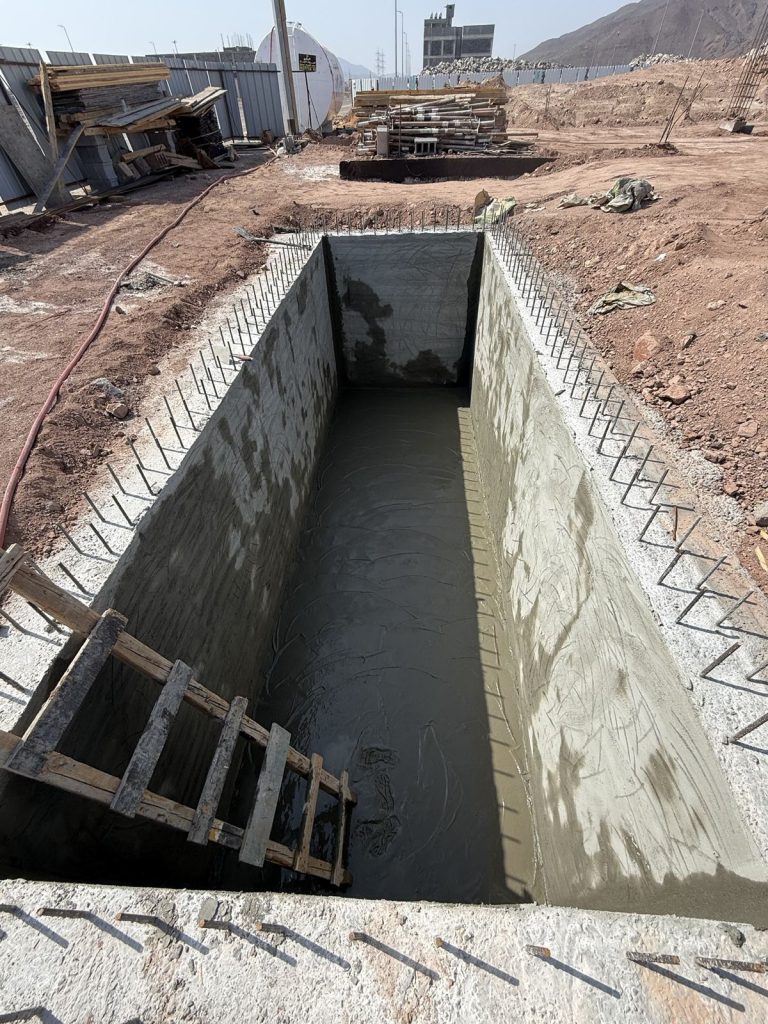
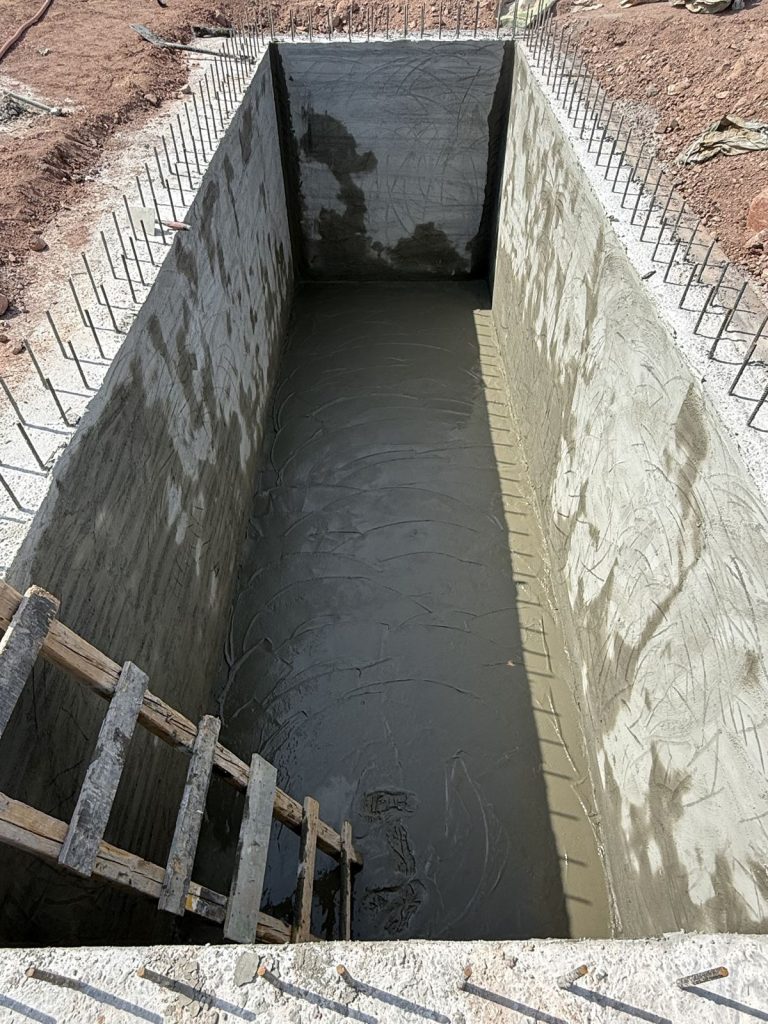
FAQ about Vetonit Bond Pure
What is Vetonit Bond Pure?
A PVA-based, single-component, water-based bonding agent and admixture for cementitious materials made by Saudi Vetonit Co. (SAVETO). It is used as a bond coat before plastering or added to the mixing water of plasters and mortars.
Can it replace spatterdash?
On smooth concrete such as tank walls we use a Bond Pure slurry coat instead of, or added to, the spatterdash and plaster while it is still tacky. On rough blockwork traditional spatterdash may be enough.
What is the mixing ratio?
Per the manufacturer: as a bond coat 2 parts product to 1 part water; as a plaster admixture 1 part product to 2 parts water. Always follow the data sheet on the pack.
Is Bond Pure a tank waterproofing?
No. It prepares the surface and improves plaster bond. The layer in contact with water must be a tank waterproofing system approved for potable water, followed by a flood test.
Vetonit and Bond Pure are trademarks of their respective owner. Technical information is based on the manufacturer’s description and our site experience; always follow the data sheet on the pack. General Contracting Est. is not affiliated with the manufacturer.
Have a ground tank or concrete walls that need proper plastering and waterproofing?
Free site visit in Madinah and the Eastern Province, with a detailed written quote.
Book a free site visitWhatsApp us
Related articles